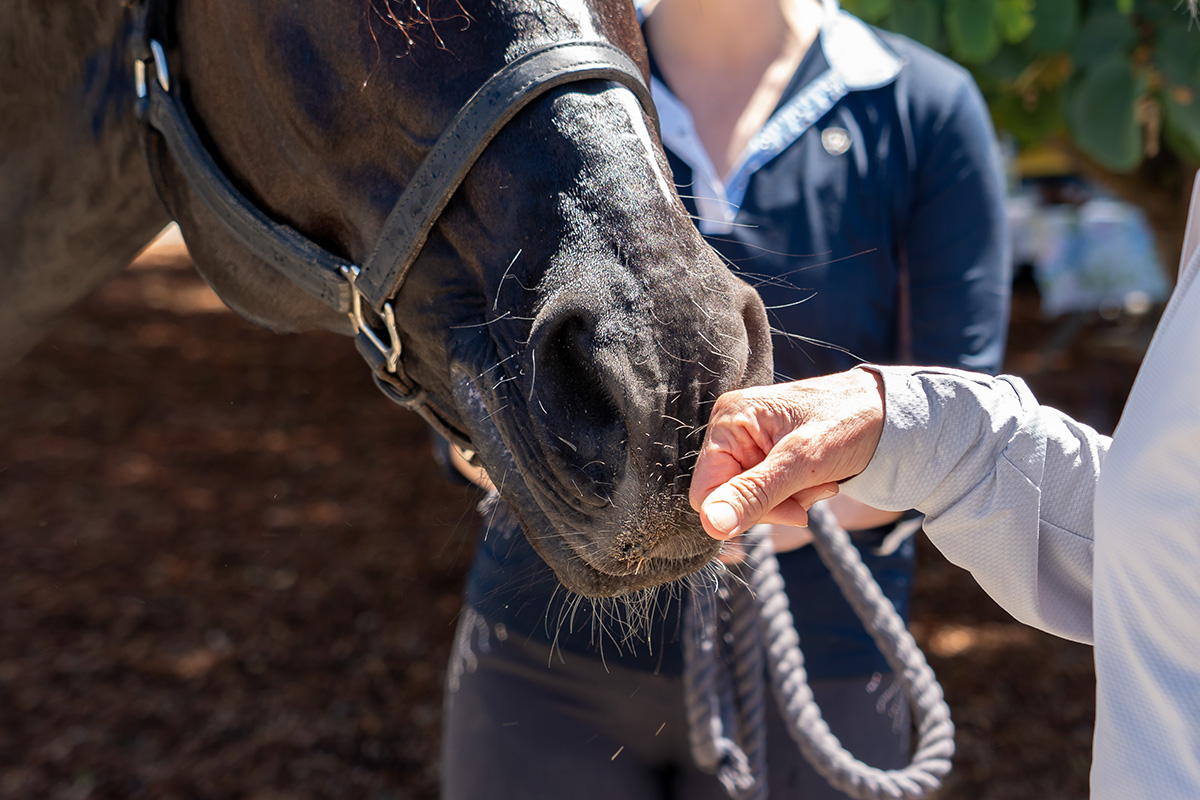
For thousands of years, horses have stood beside humans. Long before modern medicine, technology, or formal systems of care, horses were partners in survival, work, travel, and healing. They carried us across landscapes, helped build communities, and shaped the rhythms of daily life. More than tools or transport, horses were companions, collaborators, and witnesses to human struggle and resilience.
Across cultures and centuries, humans learned to read horses not through words, but through presence—through breath, movement, and attention. Horses responded not to what we said, but to how we showed up. This mutual sensitivity created a relationship grounded in trust, regulation, and shared awareness, long before those terms entered our modern vocabulary.
As society industrialized, much of this relationship faded from everyday life. Horses moved from center stage to the margins, and with that shift, many people lost regular access to the grounding, relational experiences horses naturally offer. At the same time, modern systems of care became increasingly clinical, fast-paced, and outcome-driven—often leaving little room for presence, connection, and embodied experience.
Connected Horse exists to help restore what was never meant to be lost.
At its core, Connected Horse is about keeping humans and horses connected in ways that honor both. Our work is rooted in the understanding that horses are not instruments for intervention, but sentient partners in a relationship. Through equine-assisted, relationship-based programs, we create space for people to slow down, reconnect with themselves and others, and experience moments of calm, meaning, and belonging.
This work is especially vital for individuals and families impacted by dementia and cognitive change. As memory shifts and language becomes less reliable, the relationship does not disappear—it simply changes. Horses meet people exactly where they are, responding to tone, posture, emotion, and presence. In doing so, they open pathways to connection that remain accessible even when words fail.
But Connected Horse is more than a set of programs. It is part of a growing movement that recognizes the limits of transactional care and the power of relationship-centered support. We believe that well-being is shaped not only by medical treatment, but by social connection, meaningful engagement, and access to experiences that foster dignity and agency.
Our approach reflects a simple but powerful belief: Good for Horses. Good for People. Good for Community.
Good for Horses means honoring their autonomy, well-being, and natural ways of communicating. Our programs are designed with the horse’s needs at the center—prioritizing consent, choice, and humane care. When horses are respected as partners rather than tools, the relationship becomes safer, richer, and more authentic for everyone involved.
Good for People means creating spaces where individuals feel seen, accepted, and supported without pressure to perform or improve. Whether through time at the barn, shared group experiences, or sensory-based engagement, participants are invited to be present, connect, and experience moments of ease that ripple outward into their daily lives.
Good for Community means strengthening the social fabric that surrounds care. Through volunteers, caregivers, health providers, and community partners, Connected Horse helps reduce isolation, build shared understanding, and create inclusive spaces where people of all ages and backgrounds can contribute meaningfully.
Volunteerism, collaboration, and shared stewardship are not add-ons to this work—they are the foundation. From engagement kits assembled by volunteers to workshops facilitated by trained community members, this work is sustained by people who believe that connection is worth protecting.
To support Connected Horse is to support a vision of service that is slower, kinder, and more human. It is to invest in a future where ancient wisdom and modern needs meet—where horses continue to help us remember what it means to relate, to regulate, and to belong.
In choosing to be part of this movement, we are not looking backward with nostalgia. We are carrying forward a relationship that has always mattered—and helping to ensure it remains accessible for generations to come.
